Perspective ·
Barry McGovern’s Guide to Sag Harbor Waterfront and Village Demand
By Barry McGovern · Hedgerow Exclusive Properties
A waterfront market with a village center
Sag Harbor is compelling because it is not only a summer address. The village has a working history, a compact center, restaurants, galleries, a theater, a marina, and a year-round community. Waterfront demand grows from that combination. Buyers are not choosing only a view; they are choosing a pattern of life that can include a walk for coffee, a boat in the harbor, a meal downtown, or a quieter home in Noyac or North Haven.
That broad appeal also makes simple comparisons unreliable. A harborfront residence, a bayfront home, a cove-side property, and a village house a few blocks from Main Street may all be described as Sag Harbor. Their experiences, constraints, and buyer pools can be entirely different. A useful analysis starts by asking what “waterfront” is meant to deliver: a dock, a sunset, a short walk, a protected anchorage, a beach, or simply a sense of connection to the water.
Walkability is a form of value
In Sag Harbor Village, the walk to the center can be as important as the water view. A historic home with a thoughtful renovation may appeal to a buyer who wants to leave the car behind for dinner or the theater. A home farther from the village may offer more land, privacy, or a better dock, but it may trade that convenience for a different rhythm. There is no universal answer. The right property is the one that matches how the household expects to use the East End.
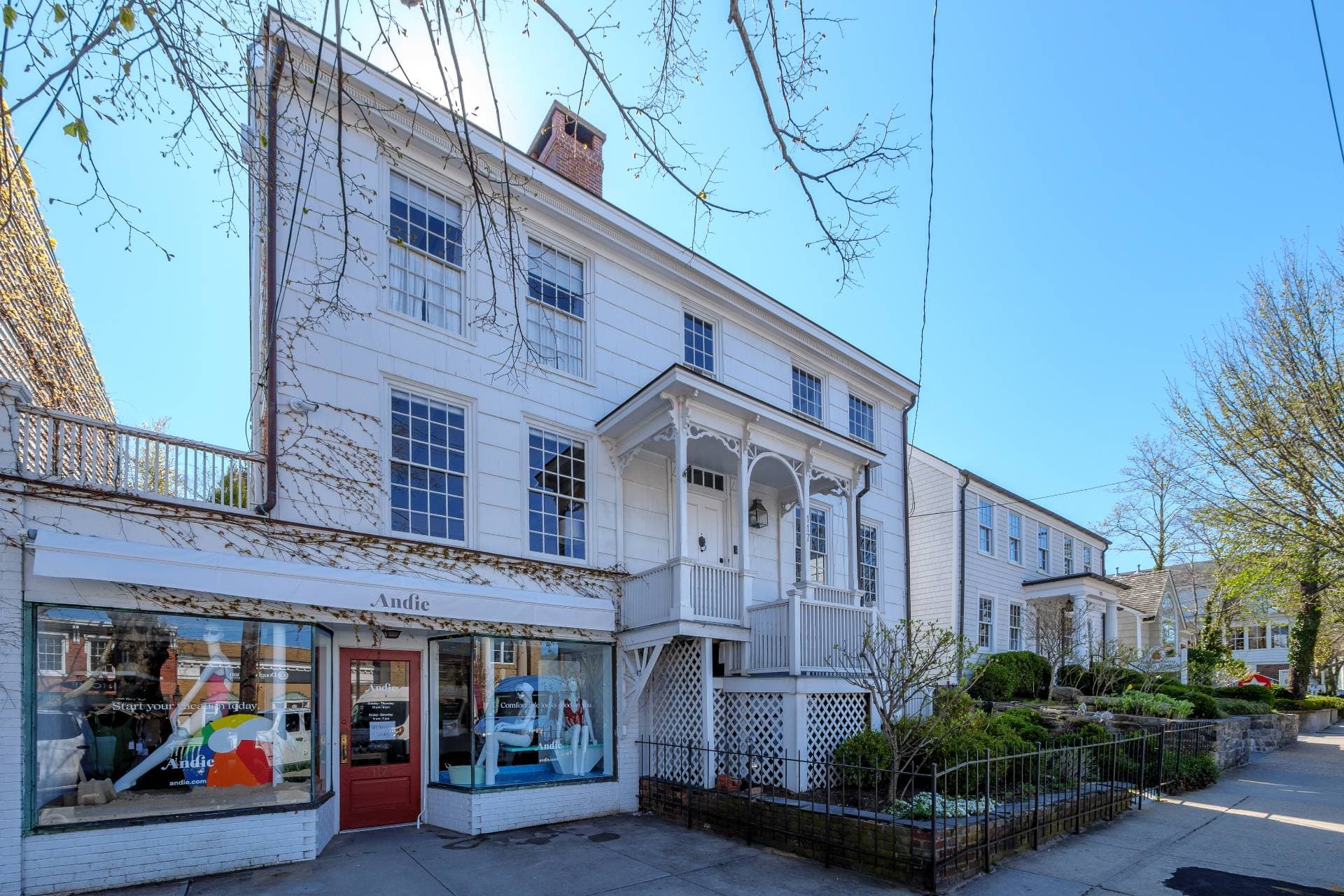
117 Main Street is a useful reference because it combines a historic investment property in the heart of the business district with a residence, retail space, period details, and a pool. It traded off-market at $5,950,000. The lesson is not that every Main Street opportunity should be priced alike. The lesson is that use, history, and location can create a value story that is different from a conventional waterfront house.
Market records show a broad spectrum as well. Recent town-page records include 100 Bay Street at $11.25M, 40 Redwood Road at $7.5M, and 6 Harding Terrace at $5.5M. These are market records, not Hedgerow transactions. They demonstrate why a buyer should ask what each property actually offers rather than applying a single village-wide price expectation.
The water has to work in real life
A dock is not a decorative line in a brochure. Buyers should ask about water depth, access, tidal conditions, permits, maintenance, and the type of boat the property can realistically support. Harbor and cove settings may be protected, but that protection can affect water access. A sunset view can be extraordinary while a particular shoreline may be less convenient for launching, swimming, or storing equipment.
The same diligence applies to flood exposure and insurance. Waterfront ownership means understanding elevation, storm history, drainage, bulkheads, septic systems, and the likely cost of ongoing care. A buyer should bring the right surveyor, engineer, insurance professional, and attorney into the process early. These questions do not diminish the romance of Sag Harbor. They protect it by making the ownership plan realistic.
How to search the micro-markets
I recommend that buyers divide a Sag Harbor search into four lanes. Start with village walkability. Then consider harbor and bay frontage, where the water relationship may be the primary driver. Add North Haven and Noyac for larger parcels, coves, and a more private setting. Finally, review village-fringe properties for the possibility of access, views, or proximity without the same level of waterfront premium.
For each lane, track the elements that cannot easily be changed: street, orientation, water access, privacy, lot geometry, and distance to the village. Treat finishes as important but replaceable. A house that needs a kitchen update may still be stronger than a polished home with a compromised setting. Conversely, a beautiful interior cannot solve a water relationship that does not match the buyer’s intended use.
Sellers should tell the most specific version of the story. If the home is genuinely walkable, show the route and the neighborhood context. If a dock or cove is the differentiator, document the practical details. If the property is historic, explain the restoration with care. Sag Harbor buyers respond to authenticity, and an accurate narrative helps the right buyer understand why a property belongs in their shortlist.
A measured outlook
Demand for Sag Harbor is likely to remain resilient because the village offers several reasons to own, not just one. A buyer can value the arts, the harbor, year-round community, or a quieter setting while still participating in the broader East End. That diversity can support the market, but it does not mean every property will perform equally. Micro-location, condition, access, and clarity of use remain decisive.
Barry McGovern works with buyers and sellers as a Licensed Real Estate Salesperson, using public market records and private context without confusing either with a guarantee. If you are considering a Sag Harbor waterfront purchase, a village home, or a discreet valuation, get in touch for a confidential conversation.

About the author
Barry McGovern is a Licensed Real Estate Salesperson with Hedgerow Exclusive Properties, a boutique ultra-luxury Hamptons brokerage that has facilitated over $2 billion in transactions since 2020. Dublin-born and a Sag Harbor local since 2013, Barry focuses on oceanfront, waterfront, estate-section, and private-market opportunities from Southampton to Montauk, and has been involved with the firm's landmark and record-breaking work.